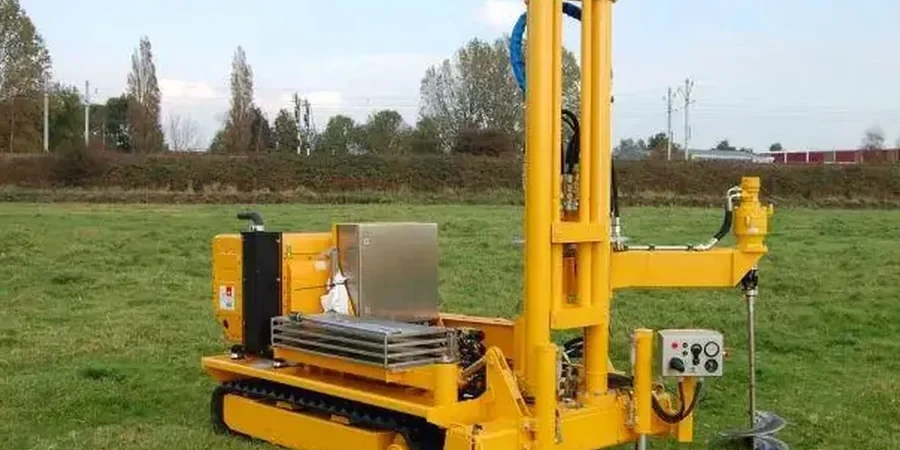
Coastal construction in Oxnard demands a clear picture of what lies beneath the surface, and that's exactly where the Cone Penetration Test proves its worth. The 2022 California Building Code (Title 24, Part 2), which incorporates the IBC with state-specific amendments, requires a thorough geotechnical investigation for any new structure. Given the city's position on the alluvial Oxnard Plain, with groundwater often within 6 to 10 feet of the surface and interlaced layers of silty sand and clay, traditional drilling methods can struggle to capture the continuous stratigraphic detail needed for a reliable foundation design. Our CPT testing provides a high-resolution, real-time profile of tip resistance, sleeve friction, and dynamic pore pressure, giving the design team a near-surgical understanding of the subsurface before a single footing is poured. For projects near the Santa Clara River or the harbor, where soft compressible layers can hide between denser strata, the value of a seismic refraction survey combined with CPT data often reveals a more complete picture of the geotechnical cross-section.
On the Oxnard Plain, a missed 3-inch silt seam can delay a project by months. CPT reveals it in real time.
Local geotechnical context
The marine influence on Oxnard's climate is gentle on residents but aggressive on the soil profile. Morning fog and a shallow water table, often less than 10 feet deep in the coastal zone south of Highway 101, create a saturated near-surface environment where loose, fine sands can be susceptible to cyclic mobility during a seismic event. The city's proximity to the Oak Ridge and San Cayetano fault systems places it in Seismic Design Category D per ASCE 7-22, making liquefaction assessment a mandatory exercise, not an academic one. A CPT test provides the continuous data needed to run a state-of-the-practice liquefaction triggering analysis, such as the Boulanger & Idriss (2014) procedure. Without this level of detail, an engineer might underestimate the post-earthquake settlement, leaving a slab-on-grade vulnerable to differential movement. We see this risk magnified in the industrial corridors where heavy rack loads meet saturated ground, and the liquefaction potential must be quantified, not guessed.
Standards that apply
ASTM D5778-20: Standard Test Method for Electronic Friction Cone and Piezocone Penetration Testing of Soils, IBC 2021 (California Building Code, Title 24, Part 2): Section 1803 Geotechnical Investigations, ASCE 7-22: Minimum Design Loads and Associated Criteria for Buildings and Other Structures, Chapter 20 on Site Classification, Robertson, P.K. (2010) Soil Behaviour Type from the CPT: an update
Common questions
What does a Cone Penetration Test in Oxnard typically cost?
For a single CPT sounding on the Oxnard Plain, the cost generally ranges from US$160 to US$250 per hour of field time, though the total project price depends on the number of soundings, the total linear footage, and whether dissipation tests are required. Mobilization for the 20-ton truck within Ventura County is a separate line item.
Can CPT completely replace a soil boring in Oxnard?
Not entirely. CPT provides continuous, repeatable data on soil behavior, but it does not retrieve a physical sample. In Oxnard's alluvial deposits, the ideal approach is to calibrate the CPT data with one or two strategically placed SPT borings, which allow for index testing and visual classification of the strata.
How deep can you push a cone in the Oxnard area?
It depends entirely on the soil density. In the soft clays and loose sands near the old river channels, we can routinely reach 60 to 80 feet. If we hit the dense, over-consolidated Pleistocene-age deposits that underlie the younger alluvium, or a gravelly paleochannel, the push capacity of the 20-ton truck may be reached sooner and refusal will occur.
Is the CPT data enough for a liquefaction assessment?
Yes, for most standard structures, a properly executed CPTu sounding is considered the gold standard for liquefaction triggering analysis. It provides the continuous tip resistance and sleeve friction needed to identify the Soil Behavior Type and to apply the cyclic stress method required by the IBC and ASCE 7 for Seismic Site Class definition.