← Home · Ground improvement

Vibrocompaction Design in Oxnard: Ground Improvement for Loose Coastal Soils

Together, we solve the challenges of tomorrow.

LEARN MORE →

Designing deep foundations in Oxnard without addressing the loose, sandy subsoil is a gamble. The coastal plain deposits and historical fill across the city, particularly near the Channel Islands Harbor, are prone to settlement and liquefaction during a seismic event. Vibrocompaction is the primary ground improvement method specified under the IBC and ASCE 7 to densify these granular profiles. Our team delivers vibrocompaction designs that target a minimum relative density of 70%, verified by post-treatment CPT testing. This process eliminates the risk of differential settlement under shallow foundations, making buildable land out of marginal coastal terrain. Working from borehole data aligned with ASTM D1586, we define grid spacing, probe type, and depth to refusal for each Oxnard site.

We target 70% relative density post-treatment, verified by CPT. That threshold turns liquefiable sand into competent bearing strata.

Our approach and scope

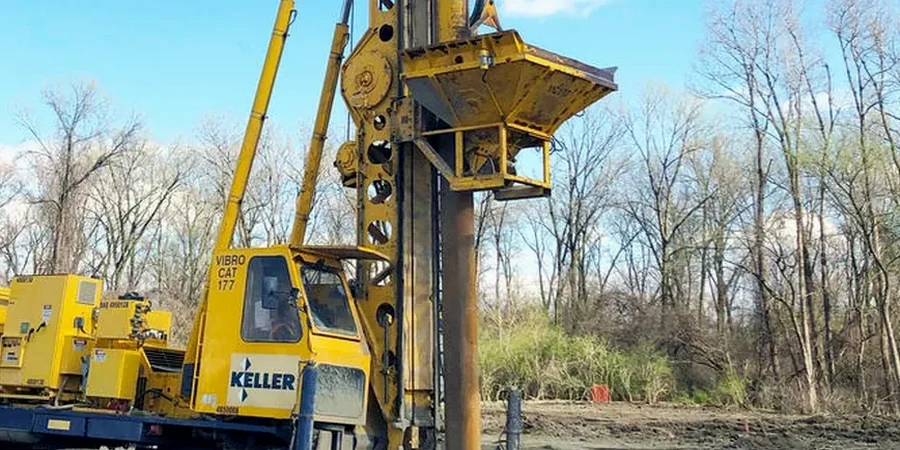
A recent industrial warehouse project off Rice Avenue sat on 15 feet of hydraulic fill over soft alluvium. Standard penetration resistances were below N=8. A conventional foundation would have required deep piles. Our design switched the approach to a vibrocompaction grid at 8-foot centers using an electric vibrator. Post-treatment verification via stone columns was ruled out because the fines content was under 12%, making pure vibrocompaction the most efficient solution. We achieved a post-treatment CPT tip resistance exceeding 120 kg/cm². Key design parameters we specify for Oxnard sites include:
Vibrocompaction Design in Oxnard: Ground Improvement for Loose Coastal Soils
Technical reference image — Oxnard

Local geotechnical context

Oxnard's development history is tied to agriculture and port expansion. Much of the city's flat terrain near the coast was once marshland or floodplain, later filled with dredged sands from harbor maintenance. This history left a legacy of loose, saturated granular soils that are highly susceptible to earthquake-induced liquefaction. The 1994 Northridge event, while centered 40 miles away, demonstrated how distant quakes can still shake the Oxnard Plain. Designing for vibrocompaction without understanding this fill history leads to underperforming treatment zones. The biggest risk is treating a soil with undetected silt lenses: the vibratory energy dissipates without densification. We mitigate this by mapping the stratigraphy from closely spaced borings before any probe hits the ground.

Need a geotechnical assessment?

Reply within 24h.

Email: info@geotechnicalengineering1.com

Typical values

ParameterTypical value
Target relative density (Dr)70-85%
Typical grid spacing6-10 ft triangular
Max treatment depth45 ft with standard rigs
Vibrator power range130-180 kW
Fines content limit<15% passing #200 sieve
Post-treatment verificationCPT per ASTM D5778 at 5% of points
Applicable standardASCE 7-22 Chapter 20

Related services

01

Vibrocompaction Grid Design

Spacing, depth, and energy input calibrated to your site's SPT/CPT data. We deliver a signed, sealed design package for city permit review.

02

Post-Treatment Verification

CPT soundings at 5% of grid points to confirm relative density targets. We compare pre- and post-treatment tip resistance and generate a compliance report.

Applicable standards

IBC 2024 Chapter 18 (Soils and Foundations), ASCE 7-22 Chapter 20 (Site Classification and Ground Motion), ASTM D1586 (Standard Penetration Test), ASTM D5778 (CPT), ASTM C33 (Concrete Aggregates for backfill)

Common questions

What does vibrocompaction design cost in Oxnard?

Design fees for a standard commercial lot in Oxnard range from US$1,660 to US$4,870, depending on the size of the treatment area and the number of verification points required. This covers the geotechnical analysis, grid layout, technical specifications, and the post-treatment CPT verification plan.

How deep can vibrocompaction treat Oxnard soils?

With our standard electric rigs, we reach depths of 45 feet. Deeper treatments to 60 feet are possible with a crane-mounted system. The limiting factor in Oxnard is often the water table: we adjust the flush method to keep the hole stable during probe extraction.

Does vibrocompaction work in soil with high silt content?

No. Vibrocompaction relies on granular particle rearrangement. If fines exceed 15%, the treatment is ineffective. In Oxnard, we frequently encounter silty layers within the alluvium. We run grain size analyses on every bore sample before specifying vibrocompaction. If silt is present, we switch the design to stone columns or rigid inclusions.
Location and service area

We serve projects in Oxnard and surrounding areas.

View larger map