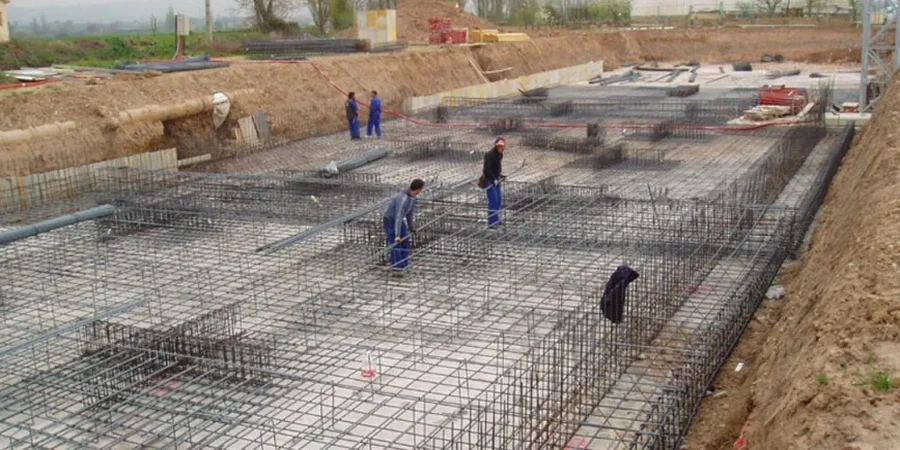
Oxnard sits on the Oxnard Plain, a broad coastal basin filled with alluvial deposits and marine terrace sediments. The IBC 2018 and ASCE 7-16 govern structural loads here, but soil conditions dictate whether a shallow foundation is feasible. Loose sands, silty clays, and groundwater at shallow depth—sometimes less than 4 feet below grade—create direct challenges for bearing capacity and differential settlement. A compliant shallow foundation design starts with subsurface exploration: borings, sampling per ASTM D1586, and lab classification according to ASTM D2487. From that data, the team evaluates shear strength and compressibility. The goal is a footing geometry and depth that safely transfers structural loads while managing total and differential settlement. For sites near the Santa Clara River or along the harbor edges, we often pair the shallow foundation analysis with a liquefaction assessment to check seismic performance under the design earthquake.
On the Oxnard Plain, shallow foundation performance hinges on controlling differential settlement across saturated silts and loose sands.
Local geotechnical context
The Oxnard Plain is mapped as a liquefaction hazard zone by the California Geological Survey. Saturated loose sands and silts at shallow depth can lose strength during a seismic event, causing bearing capacity failure even under well-designed footings. A second risk is expansive clay lenses—volumetric changes from seasonal moisture variation can lift and crack lightly loaded slabs. Third, undocumented fill across older agricultural parcels introduces unpredictable differential settlement. The design mitigates these risks through site-specific settlement analysis, overexcavation and recompaction where fill is found, and seismic checks that confirm factor of safety against liquefaction. In high-groundwater zones, the design may require a capillary break or drainage layer beneath the slab to manage moisture migration and maintain subgrade stiffness.
Standards that apply
IBC 2018 (International Building Code), ASCE 7-16 (Minimum Design Loads and Associated Criteria for Buildings and Other Structures), ASTM D1586 (Standard Test Method for Standard Penetration Test), ASTM D2487 (Standard Practice for Classification of Soils for Engineering Purposes), ASTM D1194 / D1195 (Plate Load Test – withdrawn, still referenced in practice)
Common questions
How long does a shallow foundation design take for an Oxnard commercial building?
The timeline runs about 3 to 4 weeks from field exploration to stamped report. Subsurface drilling takes one to two days. Lab testing on the samples runs concurrently with the engineering analysis. Complex sites with liquefaction issues or deep fill may add a week for additional modeling.
What’s the cost range for a shallow foundation design in Oxnard?
For a typical commercial or light industrial building on the Oxnard Plain, the geotechnical investigation and foundation design report falls between US$1,640 and US$2,950. The final number depends on the number of borings, lab testing scope, and whether a liquefaction study is required by the building department.
Do you need to test the soil before designing footings in Oxnard?
Yes. The IBC requires a geotechnical investigation for all structures except certain very small residential projects. In Oxnard, the variability of the underlying alluvial deposits—sand, silt, and clay layers can change completely within 100 feet—makes subsurface exploration non-negotiable for a reliable design.
Can a shallow foundation work if groundwater is 4 feet deep on my Oxnard site?
The reference range for this service in Oxnard is US$1.640 - US$2.950. The final price depends on the project scope and volume.