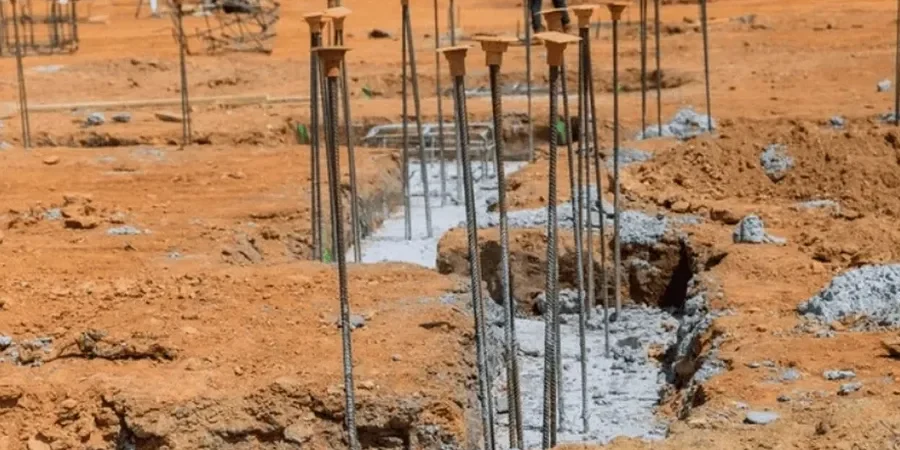
Oxnard sits at roughly 52 feet above sea level on a coastal plain where the soils tell a complicated story: layers of soft, compressible clays interspersed with loose sands left by the Santa Clara River delta. With a population approaching 205,000 and development pushing into areas once considered marginal for heavy structures, pile foundation design has become a standard requirement rather than an exception. Our team has worked on projects from the Channel Islands Harbor to the RiverPark corridor, and the soil profile rarely surprises us anymore—it demands deep foundations. When bearing strata sit 40 to 70 feet below grade, a mat foundation simply cannot transfer the loads without unacceptable settlement. Pile foundations bypass those problematic upper layers and deliver structural loads to competent material, whether that means driving through the Oxnard plain deposits into the Pleistocene-age sands beneath or socketing into the deeper formations that underlie the Oxnard Plain.
In Oxnard's coastal plain, pile design is less about finding rock and more about managing settlement through the compressible clays that dominate the upper 50 feet.
Local geotechnical context
Here's something we see repeatedly in Oxnard: pile designs that check out fine for axial loads but underestimate the lateral demands during a seismic event. The soft near-surface clays have very little lateral resistance, which means the pile head can displace significantly before the deeper soils engage. We've reviewed existing foundation plans where the structural engineer assumed a fixed-head condition at grade, but the geotechnical data showed the upper 15 feet couldn't provide meaningful lateral restraint—effectively increasing the unbraced length of the pile. Another risk specific to this area is downdrag. When fill is placed over the compressible plain deposits, the surrounding soil consolidates and grips the pile shaft, transferring negative skin friction that can overload the pile. Our pile foundation design reports always flag this explicitly, and we specify bitumen coating or oversized sleeves where settlement calculations indicate downdrag exceeding 0.5 inches. The interaction between pile groups and the slope stability of nearby excavations is also something we evaluate, particularly for waterfront projects along the harbor where the ground surface isn't level.
Common questions
What pile types are most common for Oxnard foundation projects?
For the Oxnard coastal plain, driven precast concrete piles and cast-in-drilled-hole (CIDH) piles are the two most specified types. Driven piles work well when the bearing stratum is consistent and the site can accommodate the driving equipment. CIDH piles are preferred near existing structures where vibration is a concern, or when the pile needs to socket into irregular bearing surfaces. Steel H-piles see less use here because the high groundwater and saline conditions raise long-term corrosion concerns.
How deep do piles typically need to go in Oxnard?
Most commercial and industrial projects in Oxnard require piles between 45 and 80 feet deep to reach competent bearing material. The exact depth depends on the site location relative to the Santa Clara River deposits and the structural loads. We determine the required depth through SPT borings and CPT soundings, targeting strata with blow counts consistently above 30 or cone tip resistances exceeding 150 tsf.
What is the typical cost range for pile foundation design in Oxnard?
For a typical commercial or light industrial building in Oxnard, the pile foundation design package—including the geotechnical investigation, engineering analysis, and construction specifications—runs between US$1,760 and US$6,450 depending on the project scale, number of borings, and whether dynamic testing is included. Larger multi-story or waterfront projects fall toward the upper end due to the additional seismic and lateral analysis required.